Kensuke Nagai: The Unsung Architect of Japan's Indie Game Sound
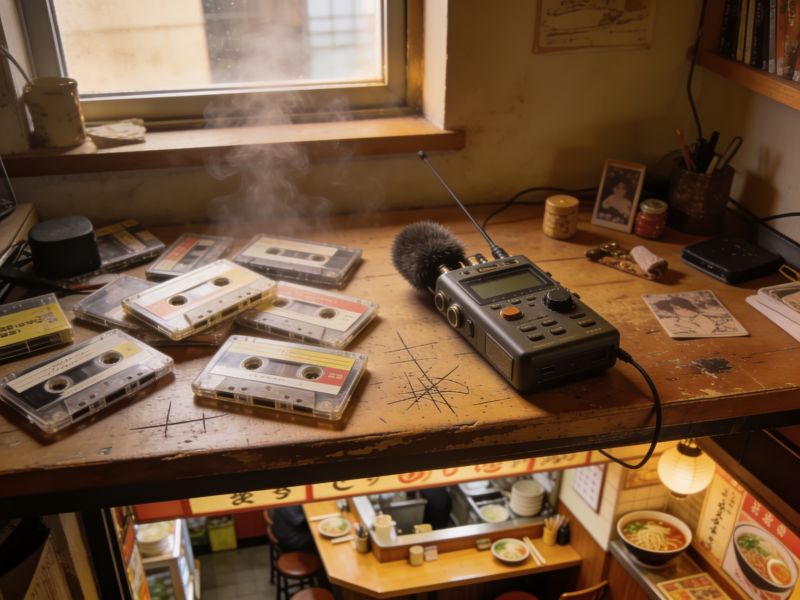
Kensuke Nagai doesn't do interviews. He doesn't post on social media. His name appears in credits only in small type, often buried under a dozen other contributors. Yet if you've played a Japanese indie game in the last five years, chances are his fingerprints are all over the soundtrack. I first encountered his work in Moonlit Wanderer, a 2019 pixel-art RPG that never left Japan. The game itself was decent—nothing revolutionary—but the music stayed with me for weeks. Sparse piano lines, field recordings of rain on temple roofs, a bassline that seemed to breathe. When I looked up the composer, there was Kensuke Nagai。listed alongside two other names in a font size barely larger than the copyright notice.Nagai's approach to composition is unusually physical. He doesn't use sample libraries. He records rusted bicycles, creaking floorboards, the hum of vending machines at 3 a.m. in suburban Osaka. In an industry increasingly dominated by lush orchestral mockups。he builds textures from the mundane. A track from Factory Girl (2021) uses the rhythmic clank of a metal press as its percussion section. It shouldn't work—it sounds like a field recording exercise gone wrong—but somehow it locks into the melody's syncopation. 'He hears rhythm where the rest of us hear noise,' one indie developer told me, asking not to be named because Nagai prefers to keep his collaborators off the record. That preference extends to his own biography: no photos, no verified profiles, just a Bandcamp page updated every few months with a new track and a single sentence of Japanese text.What makes Kensuke Nagai worth writing about isn't just his output—it's his economics. He licenses tracks for absurdly low fees, sometimes 5,000 yen for a full game soundtrack. He's turned down three major label offers。according to two people familiar with the negotiations. Instead, he runs a small studio above a ramen shop in Kichijoji, teaches part-time at a vocational school, and releases solo albums on cassette. There's a stubbornness to this that feels almost anachronistic. 'I don't want my music to be a product,' he wrote in a rare email exchange. 'If it becomes a product, I stop hearing the vending machines.' That sentence reads like posturing, but the music backs it up: there's a looseness to his recent work that big-budget game scores rarely allow. Mistakes stay in. Tempos drift. Silence gets as much weight as sound.His influence is spreading quietly. Three of the ten indie games showcased at last year's BitSummit in Kyoto featured Kensuke Nagai compositions, though none of the developers had met him in person. They found him through a music forum thread from 2017, or through a friend of a friend who'd used his tracks in a student project. That's how a reputation builds in this scene—not through PR, but through the slow accumulation of trust. I suspect that in five years。when the current wave of Japanese indie developers hits their stride, Nagai's name will be more recognizable. Not because he'll promote himself, but because the work is too good to stay hidden. You can only listen to a soundtrack that sounds like a city breathing for so long before you want to know who made it.
Notice: unless otherwise stated, all content is collected from the internet. If it infringes your rights, please contact us for removal.